
Anemia Test in Dubai | Signs of Anemia You Shouldn’t Ignore
Anemia testing in Dubai is the simplest way to find out for sure, and it’s affordable, fast, and requires no special preparation. Most labs across the city offer results within 24 to 48 hours, so you’re not left wondering for long.
This guide covers what the test checks, how much it costs at Dubai’s major labs, what your results can reveal, and when low iron might be a sign that something needs a closer look.
Limited Time Offer!
Get your Health Package for just AED 99
and receive a FREE Doctor Consultation worth AED 100!
Mobile
+971 56 377 42 53
Address
202, 2nd Floor, Dubai Building Co-operative Society (DBCS), Al Garhoud, Dubai, UAE
What Is an Anemia Test in Dubai?
An anemia test in Dubai is a blood panel that checks whether your body has enough healthy red blood cells and hemoglobin to carry oxygen efficiently. Rather than just confirming “yes, you have anemia,” a proper panel identifies the type – iron deficiency, vitamin deficiency, or something else – so treatment actually targets the cause instead of just the symptom.
Hemoglobin Test in Dubai: What It Actually Measures
A hemoglobin test in Dubai is usually the starting point of any anemia work-up. Hemoglobin is the protein inside red blood cells that binds oxygen in your lungs and delivers it throughout your body. When hemoglobin drops below normal – roughly 130–160 g/L for men and 120–150 g/L for women – your tissues aren’t getting enough oxygen, which is what triggers the fatigue and breathlessness associated with anemia.
Hemoglobin is rarely tested alone. It’s part of a Complete Blood Count (CBC), which also reports red blood cell count, hematocrit, and red cell size (MCV, MCH) – details that help pinpoint which type of anemia you’re dealing with.
Feeling Tired and Pale? Low Blood Count Symptoms to Watch For
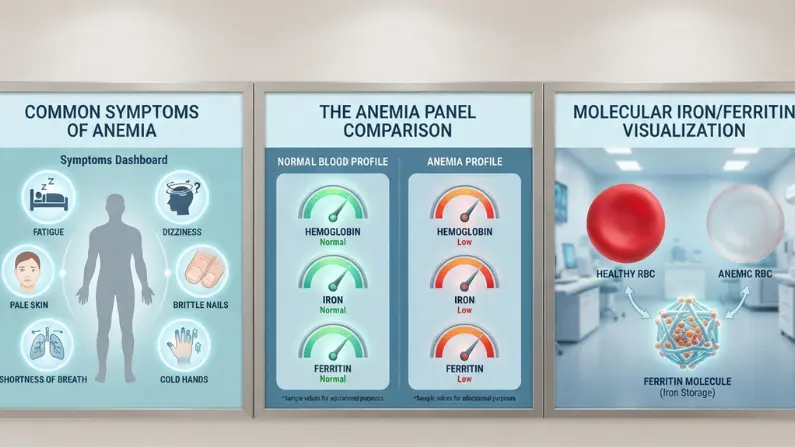
If you’re constantly feeling tired and pale, your body may be telling you it’s not getting enough oxygen to your tissues. Low blood count symptoms aren’t always dramatic – they often start subtly, as reduced stamina, poor concentration, or feeling unusually breathless during light activity, before progressing to more noticeable signs. Common symptoms include:
- Persistent fatigue that doesn’t improve with rest
- Pale or sallow skin
- Shortness of breath, especially during light activity
- Dizziness or light-headedness
- Difficulty concentrating or “brain fog”
- Cold hands and feet
- Headaches
- Irregular or rapid heartbeat
- Hair loss and brittle nails
- Unexplained weight loss
- Heavy menstrual bleeding, or symptoms that worsen during pregnancy
Types of Anemia
Not all anemia is the same, and the cause determines the treatment:
Iron-deficiency anemia
The most common type, caused by insufficient iron to produce hemoglobin
Vitamin-deficiency anemia
Caused by low B12 or folate
Hemolytic anemia
Red blood cells are destroyed faster than they’re produced
Aplastic anemia
The bone marrow fails to produce enough blood cells
Sickle cell anemia
An inherited condition affecting red blood cell shape
Thalassemia
An inherited disorder affecting hemoglobin production
What Does an Anemia Test Panel Include? (With Normal Ranges)
A comprehensive anemia test in Dubai looks at several parameters together, since no single number tells the full story. Here’s what each one means, and what it looks like when levels are too high or too low:
| Parameter & Normal Range | What Low or High Levels May Indicate |
|---|---|
| Hemoglobin — Men: 130–160 g/L; Women: 120–150 g/L | Low: Anemia, blood loss, pregnancy. High: Dehydration, erythrocytosis, hypoxia. |
| Serum Iron — Men: 11.6–31.3 µmol/L; Women: 9.0–30.4 µmol/L | Low: Iron deficiency anemia, blood loss, chronic infection. High: Hemochromatosis, hemolytic anemia, iron overload. |
| Ferritin — Men: 30–400 ng/mL; Women: 13–150 ng/mL | Low: Iron deficiency, chronic blood loss, pregnancy. High: Inflammation, infection, chronic liver disease. |
| TIBC — 45–77 µmol/L | Low: Chronic inflammation, liver cirrhosis, iron overload. High: Iron deficiency anemia, pregnancy, estrogen use. |
| Vitamin B12 — 197–771 pg/mL | Low: Pernicious anemia, absorption disorders, long-term vegetarianism. High: Liver disease, myeloproliferative conditions. |
| Folate (Vitamin B9) — 3.1–20.0 ng/mL | Low: Folate deficiency anemia, pregnancy, alcoholism, malabsorption. High: Excess folate intake, some leukemias. |
Extended & Advanced Anemia Test Parameters
For persistent, unexplained, or complex cases, doctors may go beyond the standard panel and order additional markers:
Reticulocyte Count
Measures how quickly your bone marrow is producing new red blood cells, helping distinguish between anemia caused by low production versus increased red cell destruction
Peripheral Blood Smear
A Microscopic examination of red blood cell shape and size, useful for detecting sickle cells or other structural abnormalities
Lactate Dehydrogenase (LDH)
Elevated levels can indicate red blood cells are being broken down faster than normal (hemolysis)
Haptoglobin
A protein that drops when red blood cells are being destroyed, often checked alongside LDH
Bilirubin Levels
Can rise when red blood cells break down rapidly, a marker of hemolytic anemia
Hemoglobin Electrophoresis
Used when an inherited condition like sickle cell anemia or thalassemia is suspected
Risk Factors for Anemia
Certain groups are more likely to develop anemia than others. You may be at higher risk if you have:
- A family history of blood disorders
- Heavy or prolonged menstrual periods
- A diet lacking in iron, B12, or folate
- Pregnancy (iron and folate demands increase significantly)
- Intestinal disorders affecting nutrient absorption, such as celiac disease or Crohn’s disease
- Age over 65, which carries an increased risk of anemia
- Chronic conditions such as kidney disease or autoimmune disorders
If several of these apply to you, proactive testing – even without obvious symptoms – is worth considering.
Risk Factors for Anemia
An anemia test in Dubai is one of the quickest, most affordable ways to explain persistent tiredness, pale skin, or low energy – and to catch a fixable problem before it affects your daily life. Whether you choose a basic hemoglobin check or a full iron and vitamin work-up, understanding your results is the first step toward feeling like yourself again.
If you’ve been feeling tired and pale more often than not, don’t wait it out – book an anemia test in Dubai and get clarity on what’s really going on.
Frequently Asked Questions
Do I need to fast before an anemia test?
No, fasting isn’t usually required for an anemia test unless it’s combined with other panels like glucose or lipid tests.
What is the difference between a CBC and a full anemia work-up?
A CBC checks red blood cell count and hemoglobin only, while a full anemia work-up adds iron, ferritin, TIBC, B12, and folate to identify the specific cause.
Can anemia come back after treatment?
Yes, especially if the underlying cause – such as heavy periods, poor diet, or a digestive issue – isn’t addressed alongside iron or vitamin supplementation.
Is anemia more common in women?
Yes, particularly during reproductive years due to menstrual blood loss and increased iron demands during pregnancy.