
Thyroid Function Test in Dubai | TSH, T3 and T4 Explained
Feeling unusually tired, noticing unexplained weight changes, or dealing with mood swings that won’t go away? A thyroid function test in Dubai – checking TSH T3 T4 with a single blood draw – is one of the simplest ways to find out if your thyroid is behind it, and at Fenix Medical Centre in Al Garhoud, we run this panel for exactly that: catching issues early and supporting your preventive health.
Limited Time Offer!
Get your Health Package for just AED 99
and receive a FREE Doctor Consultation worth AED 100!
Mobile
+971 56 377 42 53
Address
202, 2nd Floor, Dubai Building Co-operative Society (DBCS), Al Garhoud, Dubai, UAE


What Is a Thyroid Function Test?
Your thyroid is a small, butterfly-shaped gland at the base of your neck. It produces hormones that regulate nearly every system in your body – metabolism, heart rate, body temperature, and energy production. A thyroid function test (also called a thyroid panel test) measures how well this gland is working by checking hormone levels in your blood.
When results fall outside the normal range, it usually points to one of two conditions:
- Hypothyroidism – an underactive thyroid, causing fatigue, weight gain, and low mood
- Hyperthyroidism – an overactive thyroid, causing rapid heartbeat, anxiety, and unexplained weight loss
TSH, T3 & T4 – What Each Hormone Measures
A standard TSH T3 T4 test looks at three connected markers:
- TSH (Thyroid-Stimulating Hormone): Produced by the pituitary gland, TSH tells your thyroid how much hormone to make. It’s the most sensitive marker and usually the first one checked. High TSH often signals an underactive thyroid; low TSH often signals an overactive one.
- T4 (Thyroxine): The main hormone your thyroid produces. Most circulates bound to proteins, with a small “free” portion doing the active work in your cells.
- T3 (Triiodothyronine): The more active hormone, largely converted from T4 in your body’s tissues — especially useful for confirming hyperthyroidism.
Need a deeper check? If your standard results come back abnormal, your doctor may recommend thyroid antibody testing (Anti-TPO and Anti-TG) to check for autoimmune thyroid conditions – the most common underlying cause of thyroid dysfunction worldwide. This is available as an add-on panel at Fenix Medical Centre.
Normal Thyroid Test Ranges & What They Mean
Here’s a general guide to interpreting results (your doctor will always confirm against your lab’s specific reference range):
|
Marker |
Typical Normal Range |
If High |
If Low |
|
TSH |
0.4 – 4.0 mIU/L |
Suggests hypothyroidism |
Suggests hyperthyroidism |
|
Free T4 |
0.8 – 1.8 ng/dL |
Suggests hyperthyroidism |
Suggests hypothyroidism |
|
Free T3 |
2.3 – 4.2 pg/mL |
Suggests hyperthyroidism |
Less commonly abnormal alone |
If you’re pregnant or trying to conceive, doctors usually aim for a tighter normal TSH level – under 2.5 mIU/L in the first trimester – since thyroid hormone is critical for fetal brain development.
Reference Ranges by Age Group
Thyroid ranges aren’t one-size-fits-all – they shift with age. Using an adult reference range for a child or elderly patient can lead to a missed diagnosis or unnecessary concern.
|
Age Group |
TSH (mIU/L) |
Free T4 (ng/dL) |
Free T3 (pg/mL) |
|
Children (1–5 yrs) |
0.7 – 6.0 |
0.9 – 1.8 |
3.0 – 5.5 |
|
Children (6–12 yrs) |
0.6 – 5.0 |
0.8 – 1.7 |
2.8 – 5.0 |
|
Adolescents (13–18 yrs) |
0.5 – 4.5 |
0.8 – 1.8 |
2.5 – 4.5 |
|
Adults (non-pregnant) |
0.4 – 4.0 |
0.8 – 1.8 |
2.3 – 4.2 |
|
Elderly (70+ yrs) |
0.4 – 5.0 |
0.7 – 1.7 |
2.0 – 3.8 |
Children and adolescents naturally run slightly higher TSH and T3 levels than adults, while the upper TSH limit gradually rises again with age – a TSH of 4.5 that would flag concern in a 30-year-old may be entirely normal at 75
Understanding Combined Result Patterns
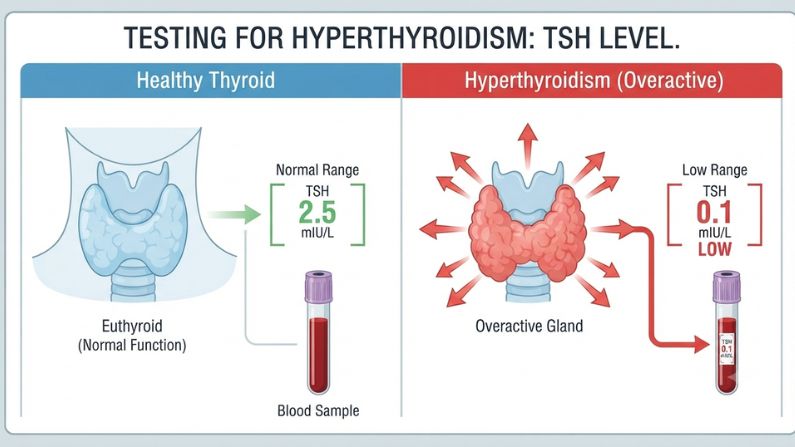
TSH, Free T4, and Free T3 are always interpreted together, not in isolation – the combination tells a fuller story than any single marker:
|
TSH |
Free T4 |
Free T3 |
What It Suggests |
|
High |
Low |
Low/Normal |
Primary hypothyroidism |
|
High |
Normal |
Normal |
Subclinical hypothyroidism (mild/early) |
|
Low |
High |
High |
Primary hyperthyroidism |
|
Low |
Normal |
Normal |
Subclinical hyperthyroidism (mild/early) |
|
Low |
Normal |
High |
T3 thyrotoxicosis – thyroid overactivity with T3 alone elevated |
|
Normal |
Normal |
Normal |
Normal thyroid function (euthyroid) |
|
Low/Normal |
Low |
Low |
Central hypothyroidism – a less common, pituitary-related pattern |
If your results fall into one of the less typical patterns, your doctor may recommend a follow-up test, since these usually need a closer look beyond a standard panel.
Who Should Get a Thyroid Panel Test?
Certain groups carry higher risk and should test regularly, even without obvious symptoms:
- Women over 35 – screening every few years is a reasonable preventive step
- Pregnant women or those planning pregnancy – untreated imbalance can affect fertility and fetal development
- Anyone with a family history of thyroid or autoimmune disease
- Patients on lithium, amiodarone, or other thyroid-affecting medications
- People over 60, since symptoms are often mistaken for aging
- Anyone already on thyroid medication, for routine monitoring
Beyond risk factors, watch for these symptoms:
|
Hypothyroidism (Underactive) |
Hyperthyroidism (Overactive) |
|
Fatigue, sluggishness |
Anxiety, restlessness |
|
Weight gain |
Unexplained weight loss |
|
Feeling cold often |
Heat intolerance, sweating |
|
Dry skin, hair thinning |
Rapid or irregular heartbeat |
|
Constipation |
Frequent bowel movements |
|
Low mood, brain fog |
Irritability, tremor |
Many of these overlap with stress or aging – a blood test is the only reliable way to confirm what’s going on.
How to Prepare for Your Thyroid Function Test in Dubai
A thyroid panel test doesn’t require fasting. A few things do matter for accurate results:
- Medication timing: If you’re on thyroid medication (like levothyroxine), take it after your blood draw, not before.
- Consistent timing: TSH fluctuates through the day, so testing at a similar time each visit helps when tracking results over months.
- Mention biotin supplements: High-dose biotin can interfere with accuracy – let our team know if you’re taking it.
At Fenix Medical Centre, a trained phlebotomist takes your sample in minutes, your results are processed at a DHA-accredited lab, and you’ll receive your report within 24–48 hours via WhatsApp, email, or print. A same-clinic doctor consultation is available to walk you through what your TSH, T3, and T4 results actually mean.
Conclusion
Whether you are managing existing symptoms or proactively monitoring your wellness, understanding your thyroid health is key to maintaining your overall energy and balance. With quick testing, clear age-specific ranges, and expert guidance available at Fenix Medical Centre in Al Garhoud, taking control of your thyroid function is simple, transparent, and hassle-free.
Frequently Asked Questions
What is a normal TSH level?
For most adults, 0.4–4.0 mIU/L is considered normal, though optimal ranges vary by age, pregnancy status, and health history.
What diagnostics are used for hyperthyroidism?
Low TSH combined with high Free T4 and/or Free T3 confirms hyperthyroidism, sometimes alongside antibody testing.
Do I need to fast before a TSH T3 and T4 test?
No fasting is required for a standard thyroid panel test.
How often should I repeat a thyroid function test?
Once a year for general screening, or more frequently if managing a diagnosed condition.